Top 10 Steam Boiler Problems & How to Fix Them
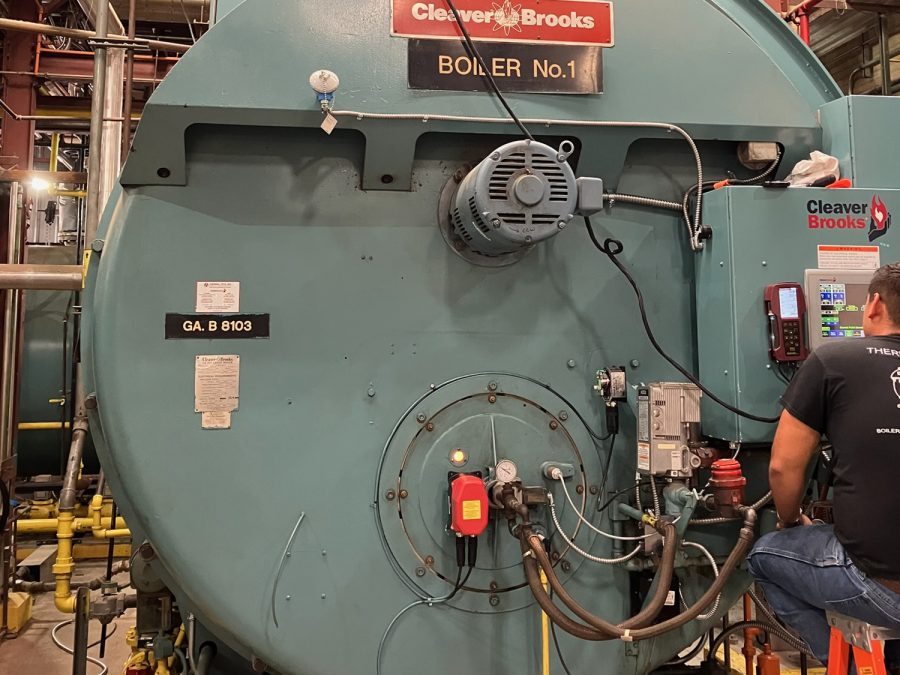
A field-tested reference from engineers and technicians who have serviced boilers across Florida and Georgia for over 40 years.
Top 10 Steam Boiler Problems Summarized:
- Scale and mineral buildup, reducing heat transfer efficiency and increasing fuel consumption
- Low water level, which can lead to overheating, tube damage, and potential system failure if not addressed quickly
- Water leaks, which can lead to energy loss, corrosion, and long-term equipment damage
- Burner and combustion issues, affecting fuel efficiency, emissions, and overall boiler operation
- Pressure fluctuations, causing inconsistent steam output and impacting system performance
- Air-to-fuel ratio imbalance, resulting in incomplete combustion and reduced efficiency
- Improper blowdown practices, leading to excess solids buildup or unnecessary energy loss
- Condensate system problems, reducing system efficiency and increasing operational costs
- Carryover and water quality issues, allowing moisture or impurities into the steam system
- Control and safety system failures, disrupt safe operation and increase the risk of shutdowns
Most steam boiler failures are not accidents. They are the predictable result of a pattern we have seen play out across thousands of boiler rooms in the Southeast over 40 years: facilities wait until something breaks before they call anyone. The industry even has a name for it. Break-fix culture quietly costs facility managers, plant operators, and administrators millions of dollars in avoidable repairs, emergency premiums, and shortened equipment life every year.
Every problem in this guide is real. Most of it is preventable. Read it, share it with your team, and if you recognize your facility in these pages, reach out. Not because something is broken, but because it doesn’t have to be.
1. Scale and Mineral Buildup
Scale is the silent efficiency killer in steam boilers. As water is boiled away, dissolved minerals; primarily calcium and magnesium; are left behind and bake onto heating surfaces. Even a thin layer of scale acts as an insulator, forcing the burner to work harder to transfer heat. A 1/8-inch layer of scale can reduce boiler efficiency by 25% or more, and thick deposits can crack tubes or cause hot spots that lead to premature failure.
COMMON SYMPTOMS
- Rising fuel consumption
- Uneven steam output
- Overheating of tubes or surfaces
- Visible deposits during inspection
ROOT CAUSES
- Untreated or undertreated feedwater
- Inadequate blowdown frequency
- Water softener malfunction
- High TDS in makeup water
RECOMMENDED ACTIONS
- Test water hardness regularly
- Chemical descaling treatment
- Review and adjust water treatment program
- Inspect and increase blowdown schedule
What this costs you
A boiler running at 25% reduced efficiency due to scale costs a typical 150 HP commercial system $18,000–$30,000 in excess fuel annually; every year, the problem goes unaddressed. Central and North Florida municipal water is among the hardest in the country, which means scale accumulates faster here than in most U.S. markets. If your last service visit didn't include a water hardness test and a blowdown review, that's worth asking about.
2. Low Water Level
Low water is the most dangerous condition a steam boiler can experience. When water drops below the minimum safe level, exposed heating surfaces overheat rapidly. This can warp or crack the pressure vessel. In severe cases, this can cause a catastrophic failure. All commercial and industrial steam boilers are required to have low-water cutoffs (LWCOs) that automatically shut the burner down before damage occurs.
COMMON SYMPTOMS
- LWCO trips frequently
- Boiler shuts down separately
- Sight glass shows low or no water
- Overheating or scorching smells
ROOT CAUSES
- Failed feedwater pump or valve
- Blocked feedwater line
- Leaking system compnents
- LWCO device fouled with scale
RECOMMENDED ACTIONS
- Do not restart until cause is identified
- Test LWCO device via slow evaporation test
- Inspect feedwater system
- Check for system leaks
What this costs you
An unplanned boiler replacement; equipment, emergency labor, and operational downtime; runs $80,000–$250,000 for a typical commercial system. Low water events are one of the leading causes of catastrophic boiler failure, and the majority are caused by fouled LWCO devices that go untested between emergencies. A quarterly or semi-annual cleaning costs a fraction of a service call. In Florida's hard water environment, it should be non-negotiable.
3. Corrosion and Pitting
Corrosion is the primary cause of premature boiler failure. It occurs when dissolved oxygen or acidic condensate attacks metal surfaces, creating pits and thin spots that weaken the pressure vessel over time. Unlike scale, corrosion damage is irreversible; corroded section in the pressure vessel must be repaired or replaced. Oxygen pitting, in particular, can progress quickly and go unnoticed until a tube or vessel wall fails.
COMMON SYMPTOMS
- Rust-colored boiler water
- Pitting visible during inspection
- Leaks at welds or tube ends
- pH readings outside 8.5-10.5 range
ROOT CAUSES
- Oxygen in feedwater (failed deaerator)
- Low pH / acidic condensate return
- Boiler left idle without wet or dry layup
- Inadequate chemical treatment
RECOMMENDED ACTIONS
- Test pH and oxygen scavenger levels
- Inspect and service deaerator
- Follow proper layup procedures
- R-Stamp repair for significant pitting
What this costs you
Corrosion damage is irreversible. By the time it's visible, the vessel has already been compromised; repair costs rise steeply with severity. Boilers left idle without proper wet or dry layup procedures are particularly vulnerable, a detail that rarely gets discussed during a routine service call. If your facility seasonally idles equipment, ask your service provider to walk your team through layup protocol. It's a 30-minute conversation that can add years to your boiler's life.
4. Burner Failure
The burner is the heart of the boiler system. Burner failures range from nuisance lockouts that require a manual reset to complete combustion system breakdowns. Gas-fired burners can fail due to ignition issues, flame sensor problems, or combustion air faults. Improper air-to-fuel ratios waste fuel, generate excess emissions and, in extreme cases, create dangerous conditions. Burner tune-ups are the single highest-ROI maintenance task on any steam boiler.
COMMON SYMPTOMS
- Burner lockout/fault codes
- Yellow or sooty flame
- Delayed or rough ignition
- Rising fuel bills without load change
- Hot spots on boiler body
ROOT CAUSES
- Dirty or failed flame sensor
- Igniter wear
- Air/fuel ratio drift
- Gas valve or actuator failure
- Oversized burner
RECOMMENDED ACTIONS
- Annual combustion analysis and tune-up
- Inspect and clean flame sensor
- Test all safety interlocks
- Replace igniter if worn
- Properly size burner to boiler and process demand
What this costs you
A combustion analysis typically pays for itself within 60–90 days in fuel savings alone. This raises a reasonable question: if your current service provider has visited your facility without performing one, what were they actually optimizing for? At Thermal Tech, combustion analysis and burner tune-up are included as standard in every preventive maintenance visit, not billed as add-ons.
5. Safety Relief Valve Issues
The pressure relief valve (SRV) is the last line of defense against an overpressure event. A SRV that fails to open when it should; or one that weeps and leaks constantly, is a safety and code compliance issue. ASME code requires SRVs to be tested and replaced on a defined schedule. In Florida, inspected boilers must have functioning SRVs, and a leaking or stuck valve will result in a failed inspection.
COMMON SYMPTOMS
- Visible steam weeping from SRV
- SRV discharging at normal pressure
- SRV won’t lift during test
- Corrosion around valve body
- Sensing points on SRV downstream
ROOT CAUSES
- Age and wear of seat / disc
- Scale or debris trapped on valve seat
- Oversized SRV for system pressure
- Water hammer damage
- Deterioration hardware
RECOMMENDED ACTIONS
- Test SRV annually (lift test)
- Replace leaking valves immediately
- Verify valve set pressure matches boiler rating
- Use only ASME-certified replacements
What this costs you
A failed SRV inspection means a boiler that cannot legally operate until it's resolved; with all the downtime and emergency costs that follow. SRV replacement is straightforward when it's planned; it becomes expensive when it's urgent. Thermal Tech stocks ASME-certified relief valves for all major manufacturers and can typically turn around a same-day replacement. More importantly, our technicians document SRV condition at every visit so you're never surprised by one.
6. Steam Trap Failure
Steam traps are one of the most overlooked components in a steam system; failed traps are one of the most common causes of energy waste. A trap that fails open allows live steam to blow through continuously, wasting thousands of dollars in fuel annually. A trap that fails closed causes condensate to back up into the steam lines, leading to water hammer, heat transfer problems, and equipment damage.
COMMON SYMPTOMS
- Water hammer in steam lines
- Uneven heating across zones
- Excessive steam venting
- High fuel consumption
ROOT CAUSES
- Normal wear on seat/disc
- Scale or debris lodged in seat
- Water hammer damange
- Trap undersized for condensate load
RECOMMENDED ACTIONS
- Annual steam trap survey
- Ultrasonic testing to ID failed traps
- Replace failed-open traps immediately
- Flush failed-closed traps
What this costs you
A single failed-open steam trap wastes $3,000–$8,000 in steam annually. Facilities with 50 or more traps that haven't conducted a survey in the past two years are almost certainly burning money they can't account for on a fuel bill line item. The technology to find these failures. Ultrasonic testing is fast, non-invasive, and pays for itself within weeks. If no one has offered you a trap survey, ask why not.
7. Improper Blowdown Procedures
Blowdown is the controlled release of boiler water to remove concentrated dissolved solids and sludge. It is one of the most important routine tasks in boiler operation. Too little blowdown allows TDS to accumulate, promoting scale and foaming. Too much wastes energy, chemicals, and makeup water. Many facilities either skip blowdown entirely or rely on operators doing it inconsistently, with no measurement of actual TDS levels. Conductivity tracking helps prevent scaling and corrosion, reduces energy and water waste, and improves boiler efficiency. Thermal Tech can provide the right TDS monitor to support optimal steam quality.
COMMON SYMPTOMS
- High TDS reading in boiler water
- Foaming or carryover
- Excessive scale buildup
- Murky or discolored boiler water
ROOT CAUSES
- No blowdown schedule in place
- Blowdown done by feel, not measurement
- Automatic blowdown controller failure
- Operator training gaps
RECOMMENDED ACTIONS
- Test TDS daily and log results
- Set target TDS range with water treatment provider
- Train operators on bottom and surface blowdown procedures
- Consider automatic TDS controller
What this costs you
Blowdown done by feel rather than measurement is one of the most common and most avoidable causes of accelerated boiler wear. Florida boiler inspections also require documented blowdown records; facilities without them are exposed at every inspection cycle. Thermal Tech offers operator training that covers blowdown procedures, water testing, and record-keeping, and can equip your team with the right TDS monitoring tools to take the guesswork out entirely.
8. Waterlogged Condensate Return
In a steam system, condensate; the water formed when steam gives up its heat; should be returned to the boiler feedwater system. When condensate cannot drain properly, it accumulates in steam lines and equipment. Slug flow of this water through the system causes water hammer: violent pressure shocks that can crack fittings, damage valves, and rupture steam traps. Waterlogging also reduces heat transfer efficiency dramatically.
COMMON SYMPTOMS
- Banging or knocking pipes
- Vibrating steam lines
- Slow heat-up of system
- Repeated fitting or trap failures
ROOT CAUSES
- Failed or clogged steam
- Improper pipe pitch
- Missing drip legs at low points
- Oversized steam lines
RECOMMENDED ACTIONS
- Survey all steam traps for failure
- Inspect pipe pitch and drip legs
- Slowly warm up system from cold start
- Add drip legs where missing
What this costs you
Water hammer events don't just damage the components they strike. They signal a system problem that will keep damaging components until the root cause is addressed. Facilities that replace fittings and traps repeatedly without a system assessment are paying for symptoms, not solutions. A Thermal Tech steam system assessment identifies the waterlogging sources and gives you a clear remediation path; so you stop replacing the same parts.
9. Carryover and Foaming
Steam carryover occurs when boiler water; along with its dissolved and suspended contaminants; is carried out of the boiler with the steam. This contaminates process equipment, clogs control valves, deposits scale in steam lines, and can cause water hammer. Foaming is a related phenomenon where a foam layer forms on the boiler water surface, dramatically increasing carryover. Both problems are closely linked to water chemistry and operating conditions.
COMMON SYMPTOMS
- Wet steam or water in steam lines
- White deposits on steam equipment
- Erratic steam pressure swings
- Dirty sight glass with foam visible
ROOT CAUSES
- High TDS in boiler water
- Oil contamination
- Overtreatment with certain chemicals
- Sudden pressure changes (surging)
RECOMMENDED ACTIONS
- Test TDS and adjust blowdown
- Check for oil contamination in condensate
- Review chemical treatment dosing
- Avoid rapid pressure changes during startup
What this costs you
Steam carryover contaminates whatever the steam touches downstream: control valves, heat exchangers, and in process applications, the product itself. For healthcare, food processing, and pharmaceutical facilities, steam purity is a compliance issue as much as a mechanical one. If your facility uses steam in any process application and you haven't had a water chemistry review in the past 12 months, that gap represents real regulatory and operational risk.
10. Control and Safety System Failures
Modern steam boilers rely on a network of controls, interlocks, and safety devices to operate safely and efficiently. When these systems fail or are bypassed, the risk of unsafe operating conditions rises significantly. Common control failures include faulty operating controls that cause the boiler to cycle incorrectly, modulating controls that cause hunting and instability and, most seriously, safety controls that have been defeated or that fail silently without triggering an alarm.
COMMON SYMPTOMS
- Boiler cycles too frequently (short-cycling)
- Erratic pressure or temperature
- Safety controls don’t respond to test
- BMS faults or alarm floods
ROOT CAUSES
- Operating control setpoint drift
- Wiring or connection degradation
- Bypassed safety interlocks
- Outdated controls not maintained
RECOMMENDED ACTIONS
- Test all safety controls annually
- Never bypass a safety interlock
- Recalibrate modulating controls
- Consider controls upgrade if system is 15+ years old
What this costs you
Outdated controls are one of the most under-discussed sources of both energy waste and safety exposure in aging boiler plants. A boiler running on original 1990s or early 2000s controls is operating without remote monitoring, modern diagnostics, or the efficiency optimization that current systems provide. As a Cleaver-Brooks authorized controls dealer and service provider, Thermal Tech can assess your current controls and show you exactly what a modern upgrade would recover: fuel savings, reliability, and peace of mind.
How to tell a partner from a standard service company?
Any boiler service company can show up when something breaks. The question worth asking is what they do the other 364 days of the year. Here are five questions to put to any provider, including us.
✔️ Do they track water chemistry trends across visits, or just address what’s visibly broken today? A provider who isn’t building a picture of your system over time isn’t protecting it. They’re reacting to it.
✔️ Have they ever told you your boiler had more life left and that replacement wasn’t necessary yet? A service partner gives you honest counsel. A vendor sells you what’s profitable.
✔️ Do their technicians arrive with parts, or do they diagnose and schedule a second visit? Fully stocked service vehicles are a choice; one that reflects how seriously a company takes your uptime.
✔️ Can they be on-site in under four hours at 2am? 24/7 emergency response is only meaningful if the person answering the phone can actually dispatch a qualified technician; not schedule one for next week.
✔️ Are their welders ASME-certified and do they hold a National Board R Stamp? These credentials aren’t marketing. They’re legal requirements for pressure vessel repair. Work performed without them exposes your facility to liability and failed inspections.
Thermal Tech holds the R Stamp, employs ASME-certified welders, runs fully stocked service vehicles, and has provided 24/7 emergency response across Florida and Georgia since 1984. We’re not the only company that can say some of that. We may be the only one in the Southeast that can say all of it.
The facilities that never have boiler emergencies aren’t lucky.
They made a decision: to treat their equipment like it matters before something goes wrong, and to partner with a team that thinks the same way. That’s the only kind of relationship we know how to have. If you’re ready to stop managing crises and start preventing them, we’d like to talk.
FAQ
What is the most common steam boiler problem? The most common problems are are low water level, scale buildup, and pressure fluctuations. Among these, low water level is the most critical because it can cause overheating and damage boiler components if not corrected quickly. Regular maintenance and proper water treatment help prevent most of these issues.
What causes low water levels in a boiler? Low water levels in a boiler are typically caused by feedwater system issues, pump failure, faulty level controls, or system leaks. Improper blowdown practices can also reduce water levels. These conditions prevent the boiler from maintaining safe operating levels and must be addressed immediately to avoid damage.
How do you improve boiler efficiency? Boiler efficiency can be improved by maintaining proper water treatment, combustion tuning, and regular maintenance. Key actions include removing scale buildup, ensuring proper air-to-fuel ratios, repairing leaks, and upgrading controls or burners when needed. Even small improvements can reduce fuel consumption and operating costs.
When should a boiler be serviced? A boiler should be serviced at least annually, with more frequent inspections depending on usage and operating conditions. High-demand systems may require quarterly or monthly checks. Regular service helps identify issues early, maintain efficiency, and ensure safe operation.
View the key differences in our Planned Maintenance program options.
Contact us to learn more about our programs or schedule service.
